Well, after the storm system that hit earlier this week, with heavy rain, high winds, and transitioning to heavy thundersnow, it seems as if the weather pattern will be repeating itself, but in a much different way. First of all, I want to show you the analysis maps, to show you where the systems are located and what they will do.
Now I will explain each of these maps, so that you will understand my forecast. The first map was a surface map. The lines that curved on the map are called isobars, or lines of equal pressure. Therefore, by looking at the surface map, you can determine areas of high pressure systems and low pressure systems. As you can see the initial surface low located over New Mexico, is very weak with only a central pressure of 1014 millibars. Computer models are currently forecasting this low to strengthen some, but not much, to a central low pressure of 1008 millibars. Even so, this will low pressure system will still produce quite a bit of precipitation over the next couple of days for many areas, even here (Oh, great!). Some of this precipitation will be snow over the Central Plains and Midwest. The heaviest snow will likely fall from northwest Kansas northeastward through Iowa, and into northern Michigan, with as much as 10 inches of snow. This will probably be a quick moving system, with rain moving into our area by late tonight, or possibly even late this afternoon, depending on the dryness of the air.
Now I will explain each of these maps, so that you will understand my forecast. The first map was a surface map. The lines that curved on the map are called isobars, or lines of equal pressure. Therefore, by looking at the surface map, you can determine areas of high pressure systems and low pressure systems. As you can see the initial surface low located over New Mexico, is very weak with only a central pressure of 1014 millibars. Computer models are currently forecasting this low to strengthen some, but not much, to a central low pressure of 1008 millibars. Even so, this will low pressure system will still produce quite a bit of precipitation over the next couple of days for many areas, even here (Oh, great!). Some of this precipitation will be snow over the Central Plains and Midwest. The heaviest snow will likely fall from northwest Kansas northeastward through Iowa, and into northern Michigan, with as much as 10 inches of snow. This will probably be a quick moving system, with rain moving into our area by late tonight, or possibly even late this afternoon, depending on the dryness of the air.
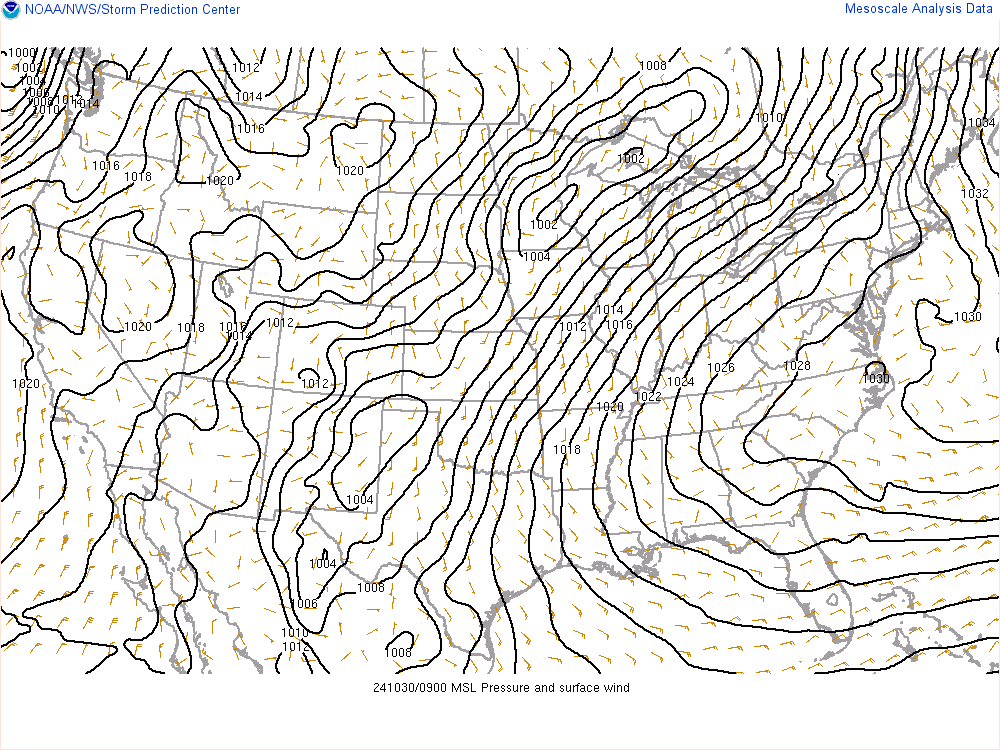 |
| Surface pressure and wind map |
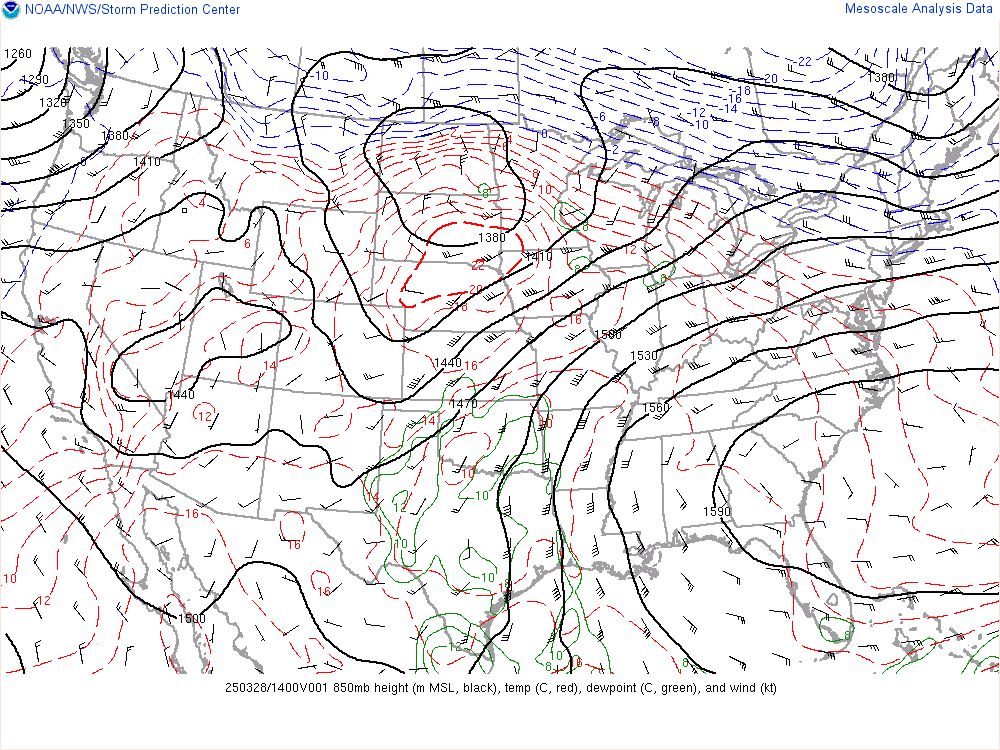 |
| 850 millibar temp and dew point map |
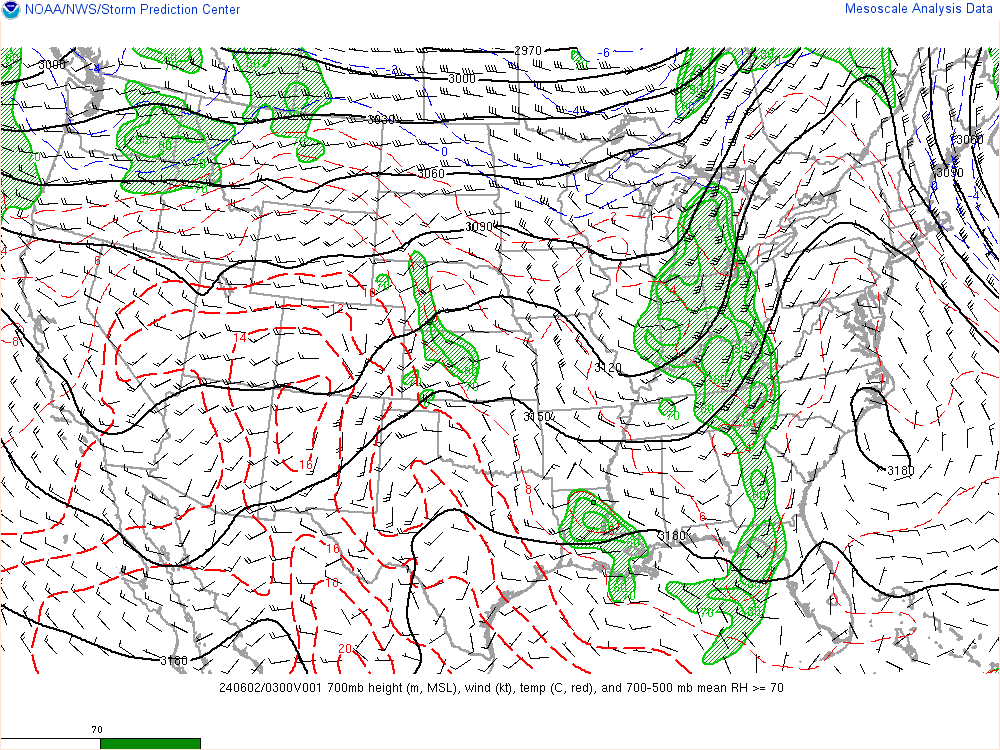 |
| 700 millibar temp and RH map |
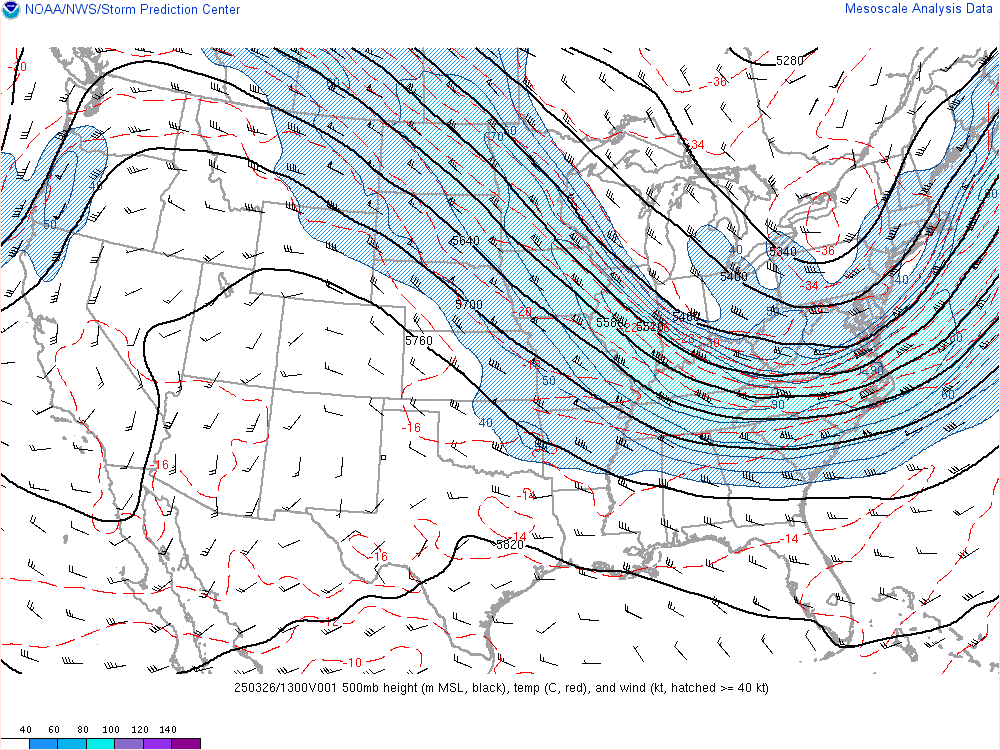 |
| 500 millibar wind speed map |
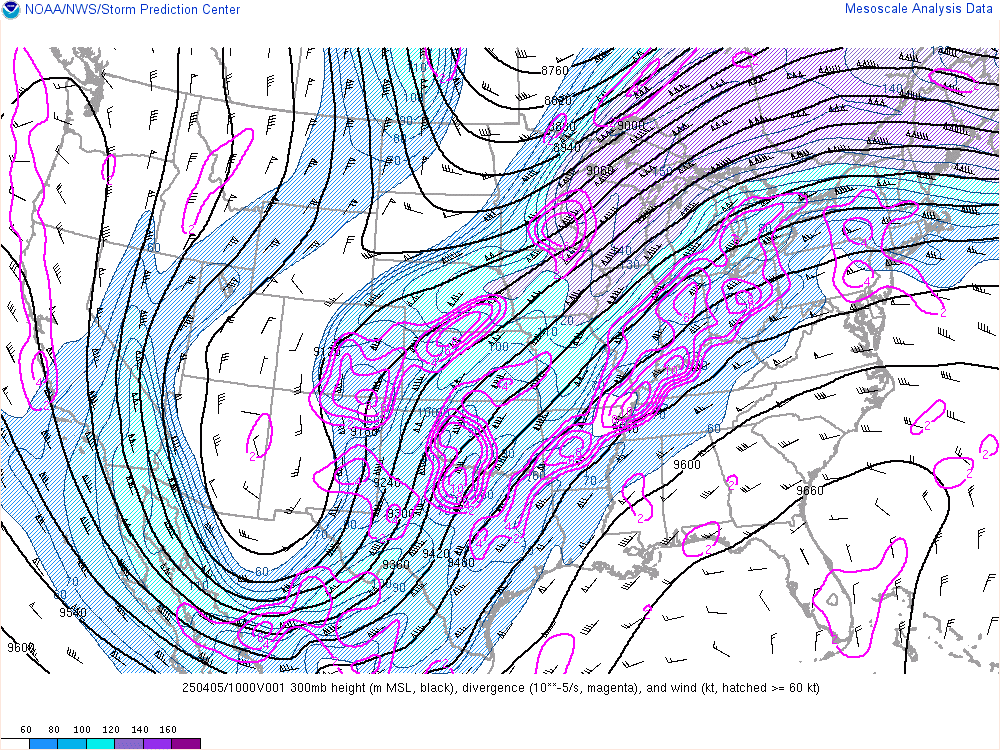 | |||||
| 300 millibar wind speed map |
The next map shows the 700 millibar layer of the atmosphere. On this map, isotherms are also indicated on the map, and so are height contours. As you can see only slight warm advection is occurring in the layer, which is also supporting the warming of the surface temperatures. The green fill on the map is indicating relative humidity. The lighter green fill indicates areas of 70% relative humidity. A general rule of thumb is that areas enclosed in 70% relative humidity on an upper air chart will most likely be cloudy. This does not always account for low level clouds. Areas of 90% humidity (darker green), usually indicating that some form of precipitation is falling in these areas. As you can see, this system has quite a bit of moisture associated with it. You can also see, the low pressure system on here. As you may have noticed, the low pressure is intensifying with height, indicating that the surface system will intensify.
On the next map, is the 500 millibar map. This map to the left is showing areas of constant wind speed (theoretically). This is the map that you would usually look at to determine the general trough/ridge pattern. The wind speed and direction in the 500 millibar layer usually indicate the speed and direction that a system will move at the surface. Generally, surface systems will move in the same direction, but at the half the speed of the winds of the 500 millibar layer. But don't be fooled, you will not be able to determine the correct movement of this system just by looking at this map, as the trough is expected to change, as told by the next map.
On the 300 millibar map, this is where the jet stream is located in the atmosphere. This is the layer of the atmosphere that you want to look at when determining where and how a surface system will move, and how the other layers of the atmosphere will change with time. The pink contour lines on the map, indicate areas of divergence in the upper atmosphere, which divergence in the upper atmosphere helps initiate surface low pressure and convergence, generating precipitation. As you can see above the storm system, are areas of divergence, which will also help a surface system to intensify. Another general rule of thumb is that when an area of higher wind speeds (a jet streak), will cause an intensification of the trough. As you can see, this what is likely to happen, while also intensifying the main storm.
So here is the forecast. It looks like this storm will continue to move northeastward, allowing the precipitation shield to expand over a large portion of the Midwest. Heavy snow will intensify over the plains and expand eastward, as an arctic air mass surges down from Canada. As it collides with the warm air from the Gulf of Mexico, heavy rain will expand, causing heavy downpours over a large area and cause flooding in areas west of here. Around here, the rain will not spread into the region until later this evening and later tonight. By early Sunday morning, a steady rainfall will be underway, with possibly heavy downpours at times, tapering to showers by the afternoon hours. With the shorter duration of this event, I expect precipitation amounts through Sunday Night to be in the quarter inch to an inch range, which will likely not cause flooding problems by itself, but will likely exacerbate pre-existing flooding problems. If the system is stronger than expected, and the system draws more moisture from the Gulf of Mexico, northward into Indiana and Ohio, rainfall may be heavier, but at this time it does not look like this will happen. Then, overnight Sunday, showers will become more numerous and widespread likely becoming steady rain by Monday morning. This second round looks to bring more precipitation, with possibility of different precipitation types. This second round will likely make flooding much worse over Northwest Ohio and Northern Indiana. There are some models that are hinting at a winter storm event over the area by Monday afternoon and night. These models are forecast arctic air to move into the area, changing the rain to snow by Monday afternoon. Some of these models are forecasting the snow to become heavy at times, especially north of U.S. highway 24. The NAM is even showing the possibility of some 12-18 inches of snow in parts of Northern Indiana, while areas north of U.S. Highway 24 will likely have more along the lines of 6-8 inches, if this model verifies. If we look at the ECMWF, this model is generally right in the middle of both the GFS (which is taking a southern route with this system, bringing the heaviest snow south of this area) and the NAM (which has the northerly route with this system, bringing the higher snow totals just to the north of here in Northern Indiana and Michigan.). If the ECMWF were to verify, it looks most of Northwest Ohio would be in for a very hefty snowstorm, with the possibility of over 12'' possible! Right now, I am very uneasy about a solution for heavy snowfall as it seems to early. Generally, the ECMWF is the best at winter weather forecasting, so we'll have to keep looking at the next several runs. I will update if anything changes in the forecast. If you want to see the analysis maps yourself, go to this link: SPC Mesocast.

No comments:
Post a Comment